Authors:
Tsveti Monova-Borisova is a PhD researcher specialising in Climate Intelligence and Strategic Resilience. A CMDR COE intern with expertise in AI-driven modeling of time-dependent systems, Resilience and strategic communications.Holds multidisciplinary academic qualifications in strategic security and defense leadership, international politics and strategic studies, modern languages, and counterterrorism and cyber warfare.
MAJ Ralitsa Bakalova is a physicist, aviation meteorologist, and climate data scientist whose research and operational expertise span atmospheric dynamics, climate-related impacts on Air Force operations, military modelling and simulation, and the integration of weather and climate intelligence into defence planning, training, and NATO collaboration.
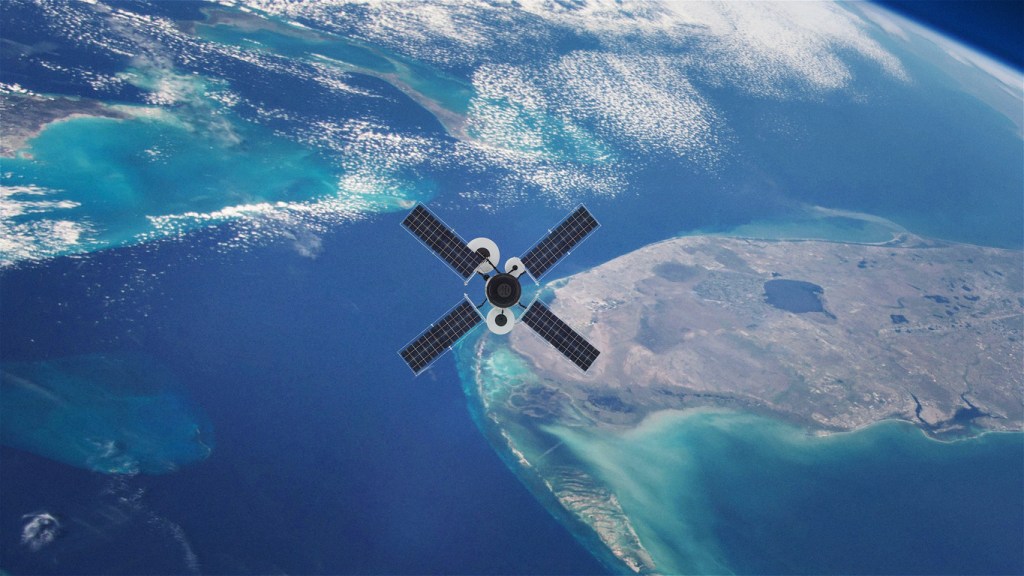
The environment in which NATO conducts its space operations is evolving—sometimes gradually, sometimes abruptly – due to forces originating both on Earth and from the Sun. The region extending from roughly 80 to 1,000 kilometers altitude, including the mesosphere, thermosphere, and ionosphere, has long been treated as a stable background through which satellites orbit and radio signals propagate. Yet recent advances in observational capabilities and whole-atmosphere modeling reveal a more dynamic, more variable, and more climate-sensitive region than previously understood. These changes directly affect NATO’s operational reliance on navigation, communication, surveillance, and the safety of spacecraft in low Earth orbit.
The unique physics of the upper atmosphere distinguish it from the familiar weather-bearing layers below. The air becomes extremely thin, dominated by atomic oxygen and lighter species, and transitions into a weakly ionized plasma shaped by solar radiation and geomagnetic energy rather than surface weather. The ionosphere—an electrically active layer critical for GNSS, HF communication, and radar—varies with season, solar cycle, geomagnetic conditions, and even long-term climate trends. When the ionosphere shifts, GNSS accuracy shifts; when the thermosphere expands, satellite drag increases; and when geomagnetic activity intensifies, radio links degrade. This interconnectedness means that NATO relies on the stability of this region far more than most people realize.
Solar Variability: Fast and Powerful Driver of Change
Solar activity remains the most immediate driver of day-to-day variability in the upper atmosphere. Solar flares and coronal mass ejections deliver bursts of radiation and charged particles that alter the ionosphere and thermosphere within minutes or hours. Thermospheric heating causes density increases that raise satellite drag, disrupting orbit predictions and forcing unplanned avoidance maneuvers.1 Energetic particle precipitation at high latitudes disturbs ionospheric electron densities, leading to scintillation, radio blackouts, and degraded GNSS performance.
Multiple recent studies using WACCM-X and coupled ionosphere-thermosphere models describe how geomagnetic storms inject energy that propagates across the entire system, influencing densities, temperatures, and ionospheric composition.234 These storm-time changes complicate space surveillance, as thousands of tracked objects can experience drag changes simultaneously.
With Solar Cycle 25 currently in an active phase, space-weather centers have seen increased demand for rapid updates. GNSS-based systems, over-the-horizon radar, SATCOM, and missile-defense tracking all depend on timely space-weather information. Monitoring systems such as global ionospheric maps5 and operational space-weather services for precise GNSS6 have become essential elements of modern defense operations, providing near-real-time updates on ionospheric conditions and storm-driven irregularities.
Climate Change in the Upper Atmosphere: Slow but Transformative Trends
While solar storms dominate short-term variability, a slower and deeper transformation is occurring due to anthropogenic climate change. High-altitude cooling and contraction of the thermosphere have been observed across decades of satellite drag measurements and confirmed by whole-atmosphere models.789 Greenhouse gases, which warm the troposphere by trapping infrared radiation, have the opposite effect in the thin upper atmosphere: they enhance infrared cooling to space. This “reverse greenhouse effect” causes the thermosphere to lose heat and contract.
Thermospheric Cooling and Contraction
A cooler thermosphere is less dense. For LEO, this means that satellites experience reduced drag, orbital lifetimes increase, failed satellites and debris remain in orbit for years or decades longer than originally predicted.
This long-term contraction is now regarded as a major contributor to the increasing congestion of LEO.10 The growing density of objects raises the baseline probability of collisions and complicates catalog maintenance.
Amplified Response to Geomagnetic Storms
A contracted thermosphere responds more dramatically to solar energy input. A geomagnetic storm that once produced modest heating can now generate larger-than-expected density increases because the background state is colder and thinner.
The 2022 Starlink failure illustrated this vulnerability: a moderate geomagnetic disturbance increased density enough to cause dozens of satellites to deorbit prematurely. Studies show that such events may become more common as the thermosphere continues cooling.
Modified Chemical and Dynamical Processes
Cooling slows chemical reaction rates, alters ozone distribution, and changes the propagation of atmospheric tides and gravity waves. These waves—generated by weather systems, topography, and convection—carry momentum upward and influence winds, temperatures, and ionospheric structure in the mesosphere and thermosphere.111213 High-resolution models predict that climate-driven changes in wave propagation will shift ionospheric density patterns, which can affect GNSS accuracy and communication reliability.
The emerging perspective is clear: the upper atmosphere is not insulated from climate change. It is part of a vertically connected climate system that is undergoing long-term change.
Coupling From Below: Tropospheric Weather Influencing Space
One of the most significant scientific advances of the last decade is recognition that the upper atmosphere is strongly coupled to the lower atmosphere. Disturbances originating in the troposphere and stratosphere—storms, convection, jet-stream variability, and sudden stratospheric warmings—can propagate upward to altitudes where satellites orbit.
Gravity waves generated by winter storms or strong tropical convection can reach the thermosphere, changing densities and triggering ionospheric disturbances. Sudden stratospheric warmings modify the global circulation pattern, influencing thermospheric winds and the distribution of key species like O/N₂, which directly impacts ionospheric electron densities.
These upward influences are now routinely resolved in models such as WACCM-X, which simulate the entire atmosphere from the ground to ~700 km. Mission planners and satellite operators increasingly recognize the need to account for tropospheric conditions when evaluating ionospheric risks.
Coupling From Above: Geomagnetic Storms Affecting the Atmosphere Below
The interaction works both ways. Geomagnetic storms deposit energy at high latitudes, heating the thermosphere and driving strong winds. These disturbances can propagate downward, affecting mesospheric temperatures, the strength of the polar vortex, and potentially influencing mid-latitude weather.
While the magnitude of these downward influences is still an active area of research, studies highlight the importance of monitoring geomagnetic energy input as part of a whole-atmosphere climate system.14
Operational Implications for NATO
- Navigation and GNSS Integrity
GNSS-dependent operations—including timing, navigation, and precision-guided systems—are vulnerable to ionospheric variability. Rapid changes in electron density can produce positioning errors, timing offsets, signal scintillation, degraded performance in contested or high-latitude environments.
Climate-driven shifts in global circulation may alter the background frequency of ionospheric irregularities, while storm-time disturbances continue to be a major operational hazard.1516
- Space Debris and Collision Avoidance
A contracted thermosphere means that debris and derelict satellites persist longer in orbit. Combined with periodic density surges during geomagnetic storms, this creates a more complex, dynamic debris environment.
Space surveillance networks must handle greater numbers of tracked objects, sudden drag-induced orbit changes during geomagnetic storms, more frequent catalogue adjustments.
Emerging infrared cooling sensors and multi-satellite monitoring networks are key tools for improving storm-time drag estimation.1718
- Communications and ISR Systems
HF communication, SATCOM links, over-the-horizon radar, and ionosphere-dependent ISR systems rely on stable plasma conditions. Ionospheric disturbances—even small ones—can degrade – long-range communication, radar coverage, signals intelligence collection, and polar-region connectivity, a growing focus for NATO.
Studies using GOLD, GNSS ROTI databases, and LEO-based TEC imaging reveal that climate trends and atmospheric waves both play roles in shaping these operational effects.192021
- Launch and Ground Infrastructure Vulnerability
Climate change affects ground-based facilities like stronger storms increase lightning and wind hazards at launch sites, extreme heat stresses electronics and radar systems, humidity and cloud cover reduce optical tracking effectiveness.
These terrestrial climate impacts interact with space-weather hazards, sometimes creating compound risks.
- Convergent Hazards and Resilience Planning
As both climate variability and solar activity increase, the likelihood of convergent hazards—storms in space and storms on Earth happening simultaneously—also increases. For example, a geomagnetic storm during a European heatwave could stress both space systems and terrestrial energy grids. Planning for such layered risks is becoming essential
The Way Forward: Capabilities NATO Needs
- Whole-Atmosphere Modeling and Prediction
Models such as WACCM-X, SAMI3/WACCM-X, and emerging nonhydrostatic approaches offer the best path to understanding the interplay between solar variability, atmospheric waves, and climate trends.2223 2425These models help predicting thermospheric density, ionospheric electron content, global wind patterns, storm-time responses.
They also provide the foundation for next-generation space-weather forecasting and climate-aware orbital planning.
Space-Based Monitoring Networks
- New monitoring technologies include:
- GNSS-based imaging constellations for 3D ionospheric mapping;
- magnetometer arrays at strategic vantage points such as the Sun–Earth L5 point;26
- infrared sensors for thermospheric cooling rates;27
- LEO total electron content imagers;
- multi-satellite risk prediction systems for safety management.28
Collectively, these systems enhance situational awareness across NATO’s space domain.
- Operational Nowcasting and Data Assimilation
Real-time ionospheric maps, drag estimates, and storm-time predictions depend on advanced data-assimilation frameworks that merge: GNSS measurements, magnetometer data, satellite drag observations, airglow emissions, and model output.
Systems such as the Ionosphere Prediction Service prototype29 and global ionospheric mapping services30 provide key foundations.
- Long-Term Geospace Climate Monitoring
To prepare for increasing orbital congestion and evolving drag environments, NATO must invest in long-term monitoring of thermospheric climate trends.3132 These data help optimize orbital regimes, satellite design, and debris-mitigation strategies.
Conclusion
The environment above the weather is entering a period of accelerated change. Once viewed as a stable backdrop for satellite operations, the mesosphere–thermosphere–ionosphere system is now recognized as a dynamic and climate-sensitive region shaped by both solar activity and long-term anthropogenic forcing. Thermospheric cooling, ionospheric variability, and enhanced coupling between atmospheric layers are altering the physical conditions that NATO depends on for navigation, communication, ISR, and space-domain awareness.
These evolving trends create strategic challenges. Reduced atmospheric drag increases orbital congestion and debris persistence, while amplified storm-time density responses complicate collision avoidance and satellite maneuvering. Ionospheric disturbances—driven by both geomagnetic storms and climate-influenced atmospheric waves—pose risks to GNSS performance, HF communication, and radar systems, particularly in high-latitude operational theaters. At the same time, ground infrastructure faces increasing vulnerability as terrestrial climate extremes intersect with space-weather hazards.
To remain resilient, NATO must adopt a whole-atmosphere approach that treats the geospace environment as a coupled climate–space-weather system. Investments in advanced modeling, expanded monitoring networks, real-time data assimilation, and long-term geospace climate tracking will be essential to maintain operational continuity and decision superiority. As space becomes more congested, contested, and environmentally dynamic, integrating climate and space-weather intelligence into planning and capability development will be vital. The upper atmosphere is no longer a passive operating medium; it is an evolving domain that demands sustained scientific attention and adaptive operational strategies.
- The Thermosphere Is a Drag: The 2022 Starlink Incident… Space Weather, 2023. ↩︎
- Impact of Lower Atmosphere Forecast Uncertainties on WACCM-X Prediction… Space Weather, 2024. ↩︎
- Impact of the Polar Vortex on Subseasonal O/N₂ Variability… JGR: Space Physics, 2024. ↩︎
- Modeling Equatorial Plasma Bubbles with SAMI3/WACCM-X… GRL, 2024. ↩︎
- The Combined Real-Time Global Ionospheric Map… IEEE Access, 2022. ↩︎
- Operational Space Weather Service for GNSS Precise Positioning, Ann. Geophys., 2005. ↩︎
- Climate Change in the Thermosphere and Ionosphere… J. Geophys. Res.: Atmospheres, 2024. ↩︎
- Progress in Investigating Long-Term Trends in the Mesosphere, Thermosphere, and Ionosphere, Atmos. Chem. Phys., 2023. ↩︎
- The Ionosphere Prediction Service Prototype… J. Space Weather Space Clim., 2019. ↩︎
- Long-Term Geospace Climate Monitoring, Front. Astron. Space Sci., 2023. ↩︎
- Assessment of Gravity Waves From Tropopause to Thermosphere… JAMES, 2024. ↩︎
- Mesosphere & Lower Thermosphere Temperatures Simulated by WACCM-X… JGR: Space Physics, 2024. ↩︎
- Interannual Variability of Winds in the Antarctic Mesosphere… JGR: Space Physics, 2024. ↩︎
- Effects of Ionosphere Dispersion on Wideband GNSS Signals, Front. Phys., 2023. ↩︎
- Climatology of Ionospheric Irregularities with GNSS ROTI, Remote Sensing, 2020. ↩︎
- Lushev, Yu. G., Physics of the Earth’s Upper Atmosphere, Monograph. ↩︎
- Space-Based Sentinels for Measurement of Infrared Cooling… Space Weather, 2018. ↩︎
- A Multi-Satellite Space Environment Risk Prediction… Remote Sensing, 2024. ↩︎
- Impact of the Polar Vortex on Subseasonal O/N₂ Variability… JGR: Space Physics, 2024. ↩︎
- Climatology of Ionospheric Irregularities with GNSS ROTI, Remote Sensing, 2020. ↩︎
- Imaging the Ionosphere and Plasmasphere Using GNSS Slant TEC… Radio Science, 2024. ↩︎
- Climate Change in the Thermosphere and Ionosphere… J. Geophys. Res.: Atmospheres, 2024. ↩︎
- Assessment of Gravity Waves From Tropopause to Thermosphere… JAMES, 2024. ↩︎
- On the Importance of Middle Atmosphere Observations… Ann. Geophys., 2024. ↩︎
- Imaging the Ionosphere and Plasmasphere Using GNSS Slant TEC… Radio Science, 2024. ↩︎
- The Vigil Magnetometer for Operational Space-Weather Services… Space Weather, 2024. ↩︎
- Space-Based Sentinels for Measurement of Infrared Cooling… Space Weather, 2018. ↩︎
- A Multi-Satellite Space Environment Risk Prediction… Remote Sensing, 2024. ↩︎
- The Ionosphere Prediction Service Prototype… J. Space Weather Space Clim., 2019. ↩︎
- The Combined Real-Time Global Ionospheric Map… IEEE Access, 2022. ↩︎
- Progress in Investigating Long-Term Trends in the Mesosphere, Thermosphere, and Ionosphere, Atmos. Chem. Phys., 2023. ↩︎
- Long-Term Geospace Climate Monitoring, Front. Astron. Space Sci., 2023. ↩︎

 De Re Militari
Трябва да влезете, за да коментирате.